
Pixel code
Tracey Road Equipment > Proving Ground Blog > Attachment Posts > Werk-Brau > EXCAVATOR BUCKET CAPACITY: HOW TO CHOOSE THE RIGHT BUCKET FOR YOUR MACHINE

EXCAVATOR BUCKET CAPACITY: HOW TO CHOOSE THE RIGHT BUCKET FOR YOUR MACHINE

When it comes to maximizing excavator performance, one of the most overlooked factors is excavator bucket capacity.

Many operators focus on machine size, horsepower, and hydraulics—but the bucket you pair with your excavator plays just as important a role in productivity, efficiency, and fuel consumption. Choosing the wrong bucket can slow down production, increase wear on your machine, and even impact jobsite safety.

At Tracey Road Equipment, we work closely with Werk-Brau, a trusted manufacturer of high-quality excavator attachments, to help customers select the right bucket for their specific applications.

Let’s break down what excavator bucket capacity really means—and how to choose the right one for your operation.

Excavator Bucket Capacity: Maximize Your Machine’s Performance

A lot of the questions we get surround the capacities of buckets. How big of a capacity can I get? What is the difference between struck and heaped capacity? Understanding excavator bucket capacities is key for estimating productivity, planning operations, and selecting the right equipment for the job. Here’s a clear breakdown of the main concepts

What Is Excavator Bucket Capacity?

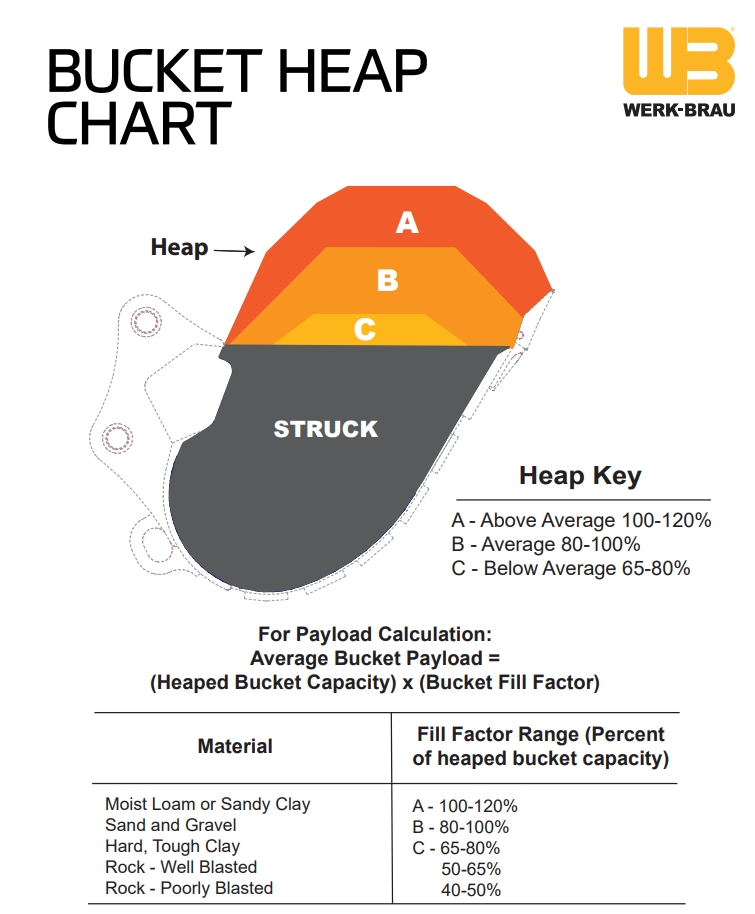
Excavator bucket capacity refers to the volume of material a bucket can hold, typically measured in cubic yards or cubic meters.

There are two main ways capacity is measured:

  • Struck Capacity – The volume of material level with the top of the bucket

  • Heaped Capacity – The volume when material is piled above the bucket edge

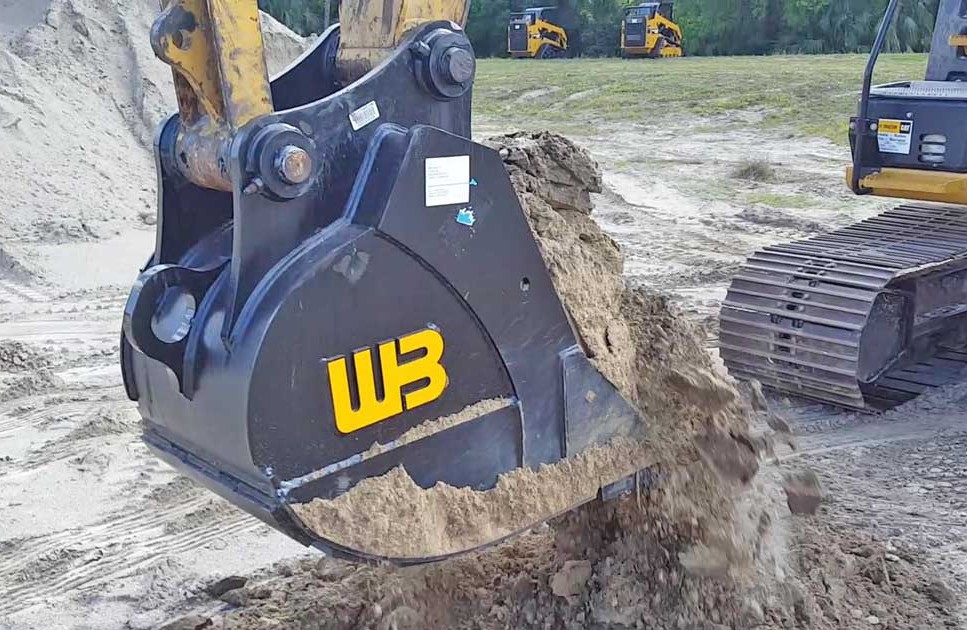
Most manufacturers, including Werk-Brau, reference heaped capacity, as it better reflects real-world usage.

But capacity isn’t just about how much material fits in the bucket—it’s about how efficiently that material can be moved.

Why Bucket Capacity Matters

Choosing the correct bucket size directly impacts your jobsite performance.

A properly sized bucket helps:

Too large, and you risk overloading the excavator.
Too small, and you lose efficiency on every cycle.

The goal is balance.

What Affects Excavator Bucket Capacity?

Bucket capacity isn’t a one-size-fits-all number. Several factors determine the right size for your machine and application.

1. Material Density

Different materials have different weights, even if they take up the same space.

For example:

  • Sand and gravel are heavy

  • Topsoil is lighter

  • Demolition debris can vary widely

A bucket that works for light material may overload your machine when used with heavier material.

2. Excavator Size and Lift Capacity

Your excavator has a rated lift capacity and hydraulic limit. The bucket must match what the machine can safely handle.

Oversized buckets can:

Werk-Brau designs buckets to properly match machine classes, helping ensure safe and efficient operation.

3. Application Type

The type of work you’re doing plays a major role in bucket selection.

Different applications require different bucket styles:

  • General Purpose Buckets – Ideal for standard digging and loading

  • Heavy-Duty Buckets – Designed for abrasive or dense materials

  • Severe-Duty Buckets – Built for extreme conditions like rock and demolition

  • Ditching / Grading Buckets – Used for finishing and shaping

Selecting the right style is just as important as selecting the right size.

4. Bucket Design and Shape

Not all buckets with the same capacity perform the same.

Design features that impact performance include:

  • Bucket width and profile

  • Side cutters and teeth configuration

  • Wear protection and material thickness

  • Fill factor (how easily material loads into the bucket)

Werk-Brau buckets are engineered for optimal fill and durability, helping operators get the most out of every pass.

How to Choose the Right Excavator Bucket Capacity

Selecting the right bucket comes down to matching the machine, material, and application.

Here’s a simple way to approach it:

Step 1: Know Your Machine Class

Start with your excavator’s size and lifting capability.

Step 2: Identify Your Primary Material

Understand whether you’re working with light, moderate, or heavy materials.

Step 3: Define Your Application

Are you digging, grading, loading, or handling demolition?

Step 4: Balance Capacity and Weight

Choose a bucket that maximizes volume without overloading the machine.

Step 5: Work with a Trusted Manufacturer

Partnering with a company like Werk-Brau ensures your bucket is designed specifically for your machine and application.

Why Werk-Brau Buckets Stand Out

At Tracey Road Equipment, we recommend Werk-Brau excavator buckets because they are built for performance, durability, and application-specific design.

Werk-Brau buckets offer:

  • Precision engineering for optimal capacity and fill

  • High-strength materials for long service life

  • Application-specific designs for different industries

  • Compatibility across a wide range of excavator sizes

  • Proven performance in demanding jobsite conditions

Whether you’re handling general excavation, heavy rock, or fine grading work, Werk-Brau offers a bucket designed to get the job done efficiently.

Get More Out of Every Cycle

Understanding excavator bucket capacity is one of the easiest ways to improve jobsite productivity without upgrading your machine.

The right bucket can:

  • Increase material moved per cycle

  • Reduce fuel usage

  • Extend machine life

  • Improve overall jobsite efficiency

If you’re not sure whether your current bucket is the right fit, it may be time to take a closer look.

Find the Right Bucket at Tracey Road Equipment

At Tracey Road Equipment, we help customers match the right bucket to their machine and application.

Whether you’re looking for a Werk-Brau bucket or evaluating your current setup, our team can help you: