
LANDCROS Mini Excavators: A First Look at the Future of Compact Equipment
Hitachi Construction Machinery is preparing for a major transformation. Beginning in April 2027, the company will officially become LANDCROS, introducing a new corporate name and updated equipment branding while carrying forward the engineering, manufacturing, warranties, products, and dealer support customers already know. During the transition, both names will appear together as customers become familiar with the LANDCROS brand.
The recent unveiling of the LANDCROS Mini concept excavator provides an early look at what that next chapter could mean for compact equipment. Rather than simply placing new decals on an existing machine, Hitachi Construction Machinery used the concept to explore how future mini excavators could improve operator visibility, comfort, communication, safety, and technology integration.
For contractors already familiar with Hitachi’s Reliable Orange excavators, the concept offers a preview of how LANDCROS Mini Excavators may build on the brand’s trusted foundation while introducing a more operator-centered approach to machine design.
Inside the LANDCROS Mini Excavator Concept
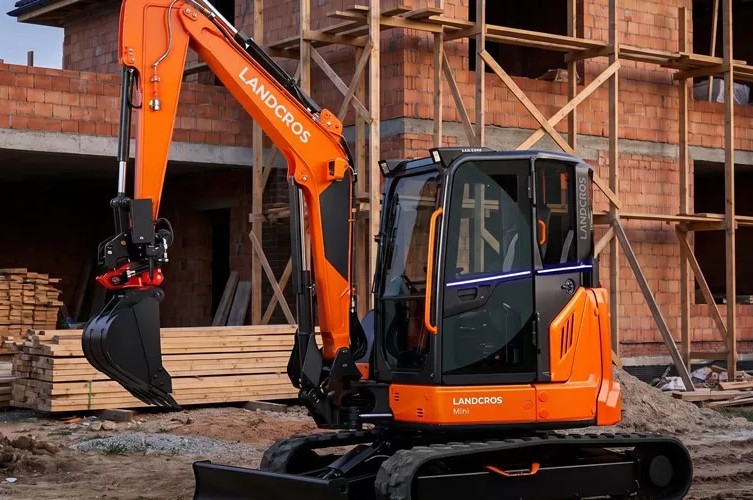
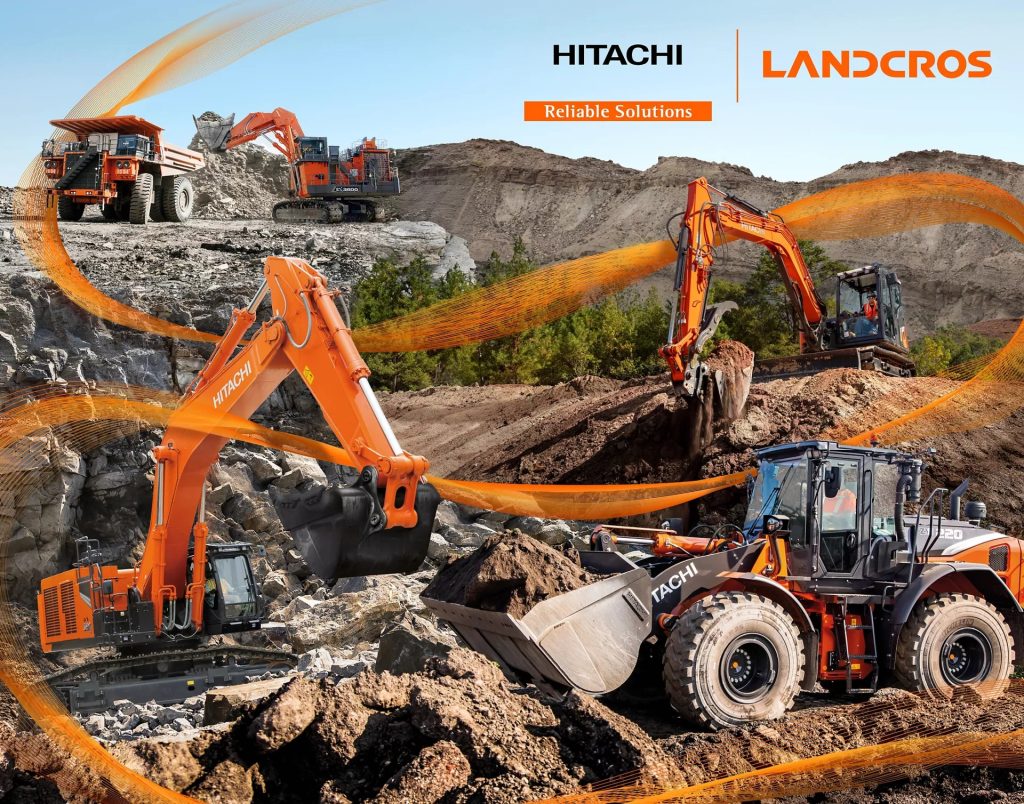
LANDCROS arrives in April 2027 to bring you solutions that accompany you through your entire project journey. From remote controlled and autonomous machinery to AI-guided maintenance and digital twins of equipment, LANDCROS will have the solutions you need to accelerate the projects of the future.
What Is the LANDCROS Mini?
The LANDCROS Mini is currently a concept excavator, not a fully announced production lineup. It was developed by Hitachi Construction Machinery Europe and presented at SaMoTer 2026 in Verona, Italy.
The five-ton concept is based on the proven Hitachi ZX55U-6 mini excavator platform. However, its cab and operator environment were redesigned around feedback from the people who spend their workdays operating compact equipment. The concept received both the SaMoTer Design Award and a Technical Mention in the hydraulic excavator category.
That distinction is important. Hitachi has not yet released a complete list of future LANDCROS Mini models, production specifications, pricing, or North American availability. The concept should be viewed as a preview of the ideas that may shape future machines rather than a finalized product announcement.
A Cab Designed Around the Operator
Compact excavators frequently work in urban settings, residential developments, utility projects, landscaping applications, and confined jobsites. Their smaller dimensions are a major advantage, but they can also restrict the amount of room available inside the cab.
The LANDCROS Mini concept approaches that challenge differently. Instead of fitting the operator and controls into whatever space remains, the design starts with the operator’s movements, expectations, frustrations, and daily workflow.
Hitachi’s engineers identified unused areas within the cab structure, including spaces associated with traditional structural blind spots. By reworking those areas, the concept creates more usable room without significantly increasing the excavator’s overall footprint.
For operators, that approach could lead to:
- A less cramped working environment
- Better placement of displays and controls
- Easier access to frequently used functions
- Reduced fatigue during long shifts
- A more natural and intuitive operating experience
The larger message is that future LANDCROS Mini Excavators may be designed around the person in the seat rather than treating the cab as a secondary consideration.
Improved Visibility for Confined Jobsites
Visibility is especially important in compact equipment. Mini excavators routinely operate near workers, buildings, vehicles, underground utilities, landscaping, and other obstacles.
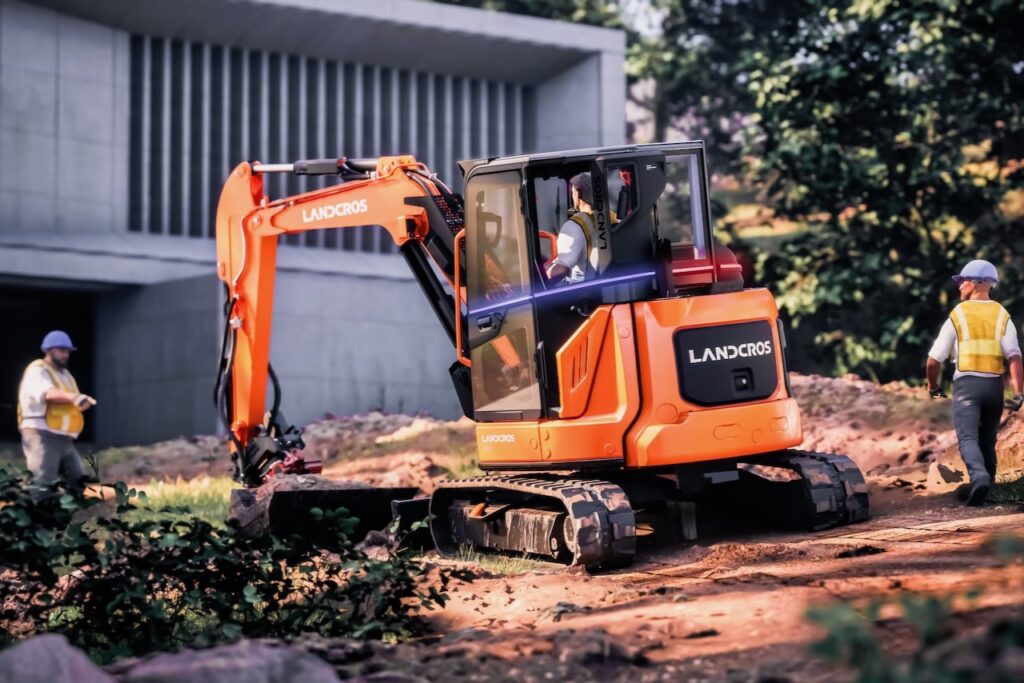
The LANDCROS Mini concept was designed to provide a clearer 360-degree view from the cab. One small but meaningful change involved moving the windshield wiper motor to the right side of the front window, clearing more of the operator’s left-hand sightline. That can be particularly valuable when working close to structures or monitoring people beside the machine.
The cab’s larger design philosophy also aims to make better use of spaces that traditionally create visual obstructions. Rather than relying entirely on cameras to overcome a difficult cab layout, the concept combines structural visibility improvements with electronic awareness systems.
The goal is not simply to give the machine a more futuristic appearance. Better sightlines can help operators position the bucket more accurately, work confidently in tight spaces, and maintain stronger awareness of activity around the excavator.
Exterior Sensors and Safety-Focused Lighting
One of the most notable ideas showcased on the concept is a lighting system connected to external sensors.
When the system detects people approaching the excavator, the interior lighting can change to red to alert the operator. Exterior LED lighting can also communicate the machine’s operating status to workers nearby.
This two-way approach could improve awareness for everyone around the machine:
- The operator receives a clear warning when someone enters the surrounding area.
- Ground workers receive a visual indication that the excavator is operating.
- Crews gain another layer of communication in busy or noisy environments.
- The system may reduce dependence on shouted warnings or assumptions about whether the operator has seen someone.
These technologies are intended to support established jobsite procedures, trained operators, and ground personnel. They should not be considered replacements for safe work practices. Instead, they demonstrate how future compact excavators may use sensors and visual alerts to strengthen communication around the machine.
Built-In Communication with Ground Crews
Excavator operators frequently need to communicate with laborers, spotters, supervisors, and utility crews. A sealed cab protects the operator from dust, weather, and noise, but it can also make conversations difficult.
The LANDCROS Mini concept includes an integrated communication unit with a speaker and microphone. This allows the operator to communicate with people outside the cab without depending entirely on hand signals, radios, or opening the cab door.
For utility work, lifting applications, confined excavation, and projects involving several people near the machine, clearer communication could help crews coordinate more effectively while allowing the operator to remain safely inside the cab.
Making Room for Third-Party Technology
Modern excavators often use additional systems for tiltrotators, grade control, attachment management, and other specialized applications. These solutions can introduce extra displays that take up space and obstruct visibility inside an already compact cab.
To address that issue, the LANDCROS Mini includes a slidable secondary display designed to accommodate third-party solutions, including systems such as Rototilt controls.
This reflects the broader philosophy behind the LANDCROS name. The company says LANDCROS represents “LAND” along with the values Customer, Reliable, Open, and Solutions. Its strategy is to become more than an equipment manufacturer by combining machinery with digital tools, services, communications, AI, robotics, and other technologies.
An operator-friendly space for third-party systems could provide several practical benefits:
- Cleaner installation of attachment controls
- Less clutter inside the cab
- Better visibility around mounted displays
- Easier integration of new technology
- More flexibility as contractor needs change
The Same Reliable Orange Under a New Name
Customers may understandably wonder whether the LANDCROS transition means the equipment, dealer network, warranties, or support structure will also change.
According to Hitachi Construction Machinery, the transition is primarily a change in corporate and brand identity. The company says its equipment will retain the same Reliable Orange color, model naming, manufacturing standards, product offerings, warranty policies, and dealer relationships. Beginning in April 2027, the LANDCROS name and decals will officially replace Hitachi Construction Machinery branding.
What is expected to expand is the company’s focus on connected and intelligent solutions. LANDCROS is intended to represent a movement from manufacturing machines alone toward developing a more complete jobsite experience supported by technology throughout the machine lifecycle.
For existing Hitachi customers, the transition can be summarized simply:
The name is changing, but the trusted equipment foundation and dealer support remain.
What the Concept Could Mean for Future LANDCROS Mini Excavators
Because the LANDCROS Mini is still a concept, it would be premature to say that every feature will appear unchanged on future production machines. However, the project reveals several clear priorities for upcoming compact equipment:
- Operator-centered cab design
- Greater all-around visibility
- Smarter awareness of people near the machine
- Easier communication with ground crews
- Cleaner integration of third-party technology
- More customizable and connected operator environments
Hitachi Construction Machinery is also using feedback from operators and visitors who experienced the concept at SaMoTer to help guide future development.
That makes the concept more than a styling exercise. It is functioning as a test platform for ideas that could eventually influence future LANDCROS Mini Excavators.
LANDCROS Mini Excavators and Tracey Road Equipment
Tracey Road Equipment is proud to represent Hitachi Construction Machinery and to support customers throughout the transition to the LANDCROS brand.
As additional information becomes available about the future compact excavator lineup, our team will continue sharing updates on:
- New LANDCROS Mini models
- Production specifications
- North American availability
- Operator-assistance technology
- Attachment compatibility
- Service, parts, and warranty support
The LANDCROS Mini concept gives contractors an early view of where compact excavation may be headed. It combines the dependable foundation associated with Hitachi excavators with new ideas centered on the operator, jobsite awareness, communication, and open technology integration.

Service Hours
Syracuse:
- Monday - Friday: 7:00AM - 11:00PM
- Saturday: 7:00AM - 12:00PM
- Sunday: Closed
Other Locations:
- Monday - Friday: 7:00AM - 5:00PM
- Saturday - Sunday: Closed
Elite Support Locations
Other Locations