
New Detroit Gen 6 Engines: Built for the Next Generation of Freightliner Trucks
Big changes are coming under the hood of Freightliner trucks.
Detroit has introduced its Gen 6 heavy-duty engine family, bringing the next generation of the DD13, DD15, and DD16 engines to the commercial truck market. Designed to meet upcoming 2027 EPA emissions requirements, the new engines aren’t simply about reducing emissions. Detroit has also focused on improving fuel efficiency, torque delivery, engine braking, reliability, and overall integration with the truck.
For Freightliner customers, the transition begins in January 2027, when production of the new Gen 6 DD13 and DD15 engines is scheduled to begin. The Gen 6 DD16 will follow in 2028.
So, what exactly is changing? And which new Detroit engine belongs in which Freightliner truck?
Let’s take a closer look at the Detroit Gen 6 engines and what Freightliner owners and fleet managers should know before 2027.
Detroit Gen 6 Engines: More Power, Less Fuel
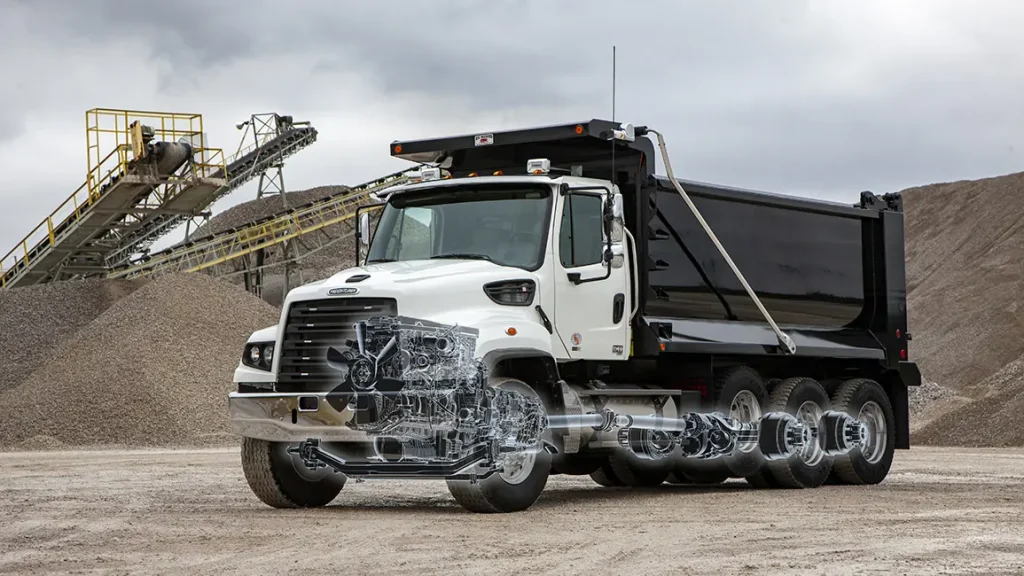
Freightliner trucks are expected to put in the hard work and the long hours.
Day after day, they start early and run consistently through traffic, weather, grades, and job sites. Fleets, owner operators, and drivers rely on them to pull their load, stay efficient, and come back ready to go again tomorrow.
Meet the Detroit Gen 6 Engine Family
Detroit’s Gen 6 lineup builds on a heavy-duty engine platform that has been around since the introduction of the DD15 in 2007. More than 1.2 million engines based on this platform have since been sold.
Instead of starting over, Detroit retained approximately 75% of the previous engine platform while concentrating its changes in areas that could improve performance, efficiency, emissions, and reliability.
That’s an important distinction for fleets.
The engines and aftertreatment systems maintain familiar dimensions and packaging. That helps minimize changes to wheelbases, back-of-cab equipment, body configurations, and vocational upfits. It also means technicians aren’t being asked to learn an entirely unfamiliar engine architecture.
The result is an evolution of the Detroit engine family rather than a complete reinvention.
Detroit Gen 6 Engine Specifications
Three engines make up Detroit’s Gen 6 heavy-duty family:
| Engine | Displacement | Horsepower | Torque | Best Suited For |
|---|---|---|---|---|
| Gen 6 DD13 | 12.8 L | 410-525 HP | 1,450-1,850 lb-ft | Regional haul and vocational |
| Gen 6 DD15 | 14.8 L | 425-505 HP | 1,650-1,900 lb-ft | Long-haul and high-mileage applications |
| Gen 6 DD16 | 15.6 L | 560-605 HP | 1,850-2,050 lb-ft | Extreme heavy-haul and severe-duty work |
The DD13 and DD15 are scheduled to enter production in January 2027. The DD16 will receive the Gen 6 updates beginning in 2028.
While all three share the same Gen 6 engineering philosophy, they’re designed for very different jobs.
Gen 6 DD13: Versatility for Regional and Vocational Work
The Detroit Gen 6 DD13 is the smallest of the three engines, but don’t mistake smaller displacement for limited capability.
The 12.8-liter DD13 produces 410 to 525 horsepower and 1,450 to 1,850 lb-ft of torque.
Detroit positions the DD13 as a versatile, lightweight engine for regional and vocational applications. Its combination of power and lower weight makes it a strong choice for operations where payload, maneuverability, and frequent changes in operating conditions matter.
Within the Freightliner lineup, the Gen 6 DD13 will be available in the Fifth Generation Cascadia and 114SD Plus.
That makes it particularly versatile.
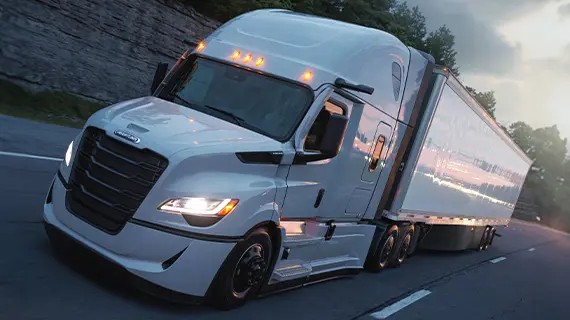
In a Cascadia, the DD13 can be a strong option for regional transportation and applications where fleets don’t necessarily need the larger displacement of a DD15.
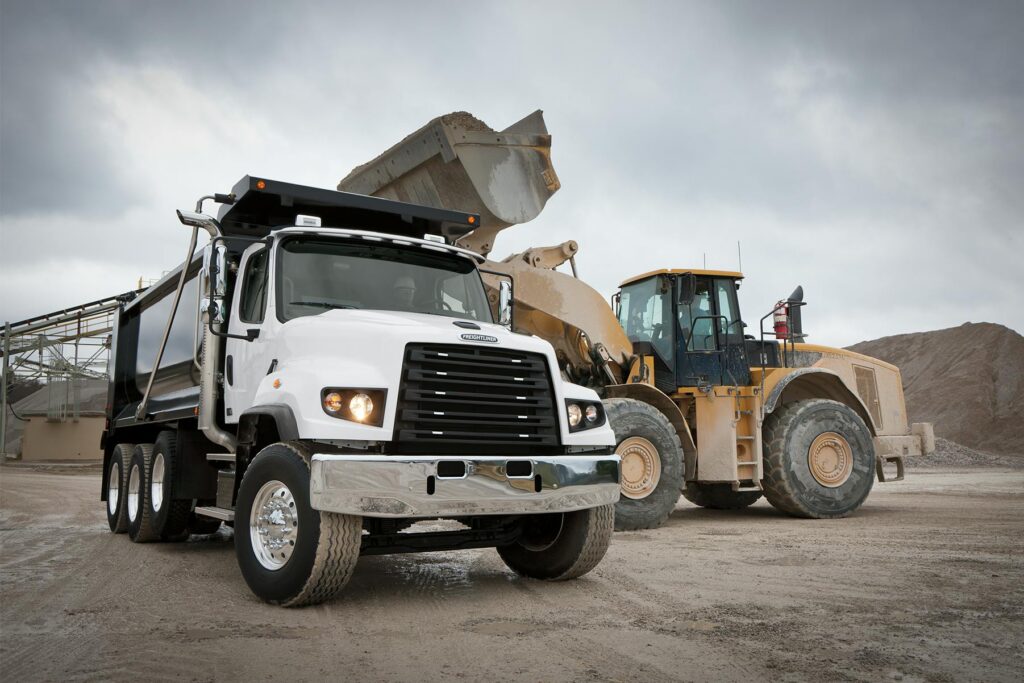
Move that same engine into a 114SD Plus and its role changes. With ratings reaching 525 horsepower, the DD13 can power vocational applications ranging from dump trucks and mixers to construction and municipal trucks.
Gen 6 DD15: Built for the Long Haul
For fleets putting serious highway miles on their trucks, the Detroit Gen 6 DD15 will likely attract the most attention.
The 14.8-liter engine produces 425 to 505 horsepower with 1,650 to 1,900 lb-ft of torque.
Detroit describes the DD15 as its efficient, large-displacement option for higher annual mileage, making it a natural match for the Fifth Generation Freightliner Cascadia.
The DD15 has long been a cornerstone of the Detroit Integrated Powertrain, pairing with the Detroit DT12 transmission and Detroit axles to create a powertrain engineered as a complete system.
For long-haul fleets, that integration is important. Fuel efficiency isn’t determined by the engine alone. Engine speed, transmission shifting, gearing, terrain, and vehicle controls all contribute to how efficiently a truck moves down the highway.
The Gen 6 DD15 continues that integrated approach while adding the latest combustion and aftertreatment improvements.
What About the Gen 6 DD16?
At the top of the Gen 6 family sits the 15.6-liter DD16, producing 560 to 605 horsepower and up to 2,050 lb-ft of torque.
This is the big-bore option for the most demanding heavy-haul and severe-duty applications.
However, there’s an important distinction for Freightliner customers: Detroit currently lists the Gen 6 DD16 for Western Star 47X and 49X applications, rather than the current Freightliner lineup.
The engine also arrives later, with Gen 6 DD16 production scheduled to begin in 2028.
Even though it isn’t currently positioned as a Freightliner engine, it’s still worth understanding because it completes Detroit’s Gen 6 heavy-duty engine family and demonstrates how the same platform scales from regional applications to extreme heavy haul.
Up to 3% Better Fuel Economy
One of the biggest improvements with Gen 6 happens inside the combustion chamber.
Detroit redesigned the combustion system to make more efficient use of every drop of fuel.
A simplified high-pressure fuel rail provides more consistent fuel pressure, while new direct-pressure injectors help create balanced fuel delivery. Detroit also revised the intake design to improve how air and fuel mix inside the cylinder.
The Gen 6 engines use Miller cycle intake timing, which reduces the work required during compression and helps lower combustion temperatures.
Combined, these changes allow the engine to extract more useful energy from the fuel rather than losing that energy as heat.
Depending on application and duty cycle, Detroit says the new platform can provide up to a 3% improvement in fuel economy compared with the previous generation.
For an individual truck, a few percentage points might not sound dramatic. Across a fleet running hundreds of thousands or millions of miles each year, the savings can add up quickly.
More Torque Where Drivers Need It
Efficiency doesn’t mean sacrificing performance.
Detroit has also focused on delivering stronger torque at lower engine speeds.
Greater low-RPM torque allows the engine to maintain speed with fewer shifts when pulling grades, hauling heavy loads, or traveling through changing terrain.
The Gen 6 turbocharger has also been refined to improve low-speed response and maintain consistent performance at higher elevations.
Engine braking receives improvements as well.
Stronger and more responsive engine braking gives drivers greater control when descending grades or operating in stop-and-go vocational environments. Reducing reliance on the truck’s service brakes can also help decrease brake wear over time.
A New Approach to 2027 Emissions
The 2027 emissions regulations present one of the biggest engineering challenges facing heavy-duty engine manufacturers.
Detroit’s answer is an updated 1-Box aftertreatment system.
The new system adds a compact Pre-SCR component positioned closer to the engine. Because it is closer to the heat source, the system can reach its optimal operating temperature more quickly.
A thermal control valve further helps manage temperatures and increase passive regeneration.
For drivers and fleets, the goal is straightforward: fewer parked regenerations and fewer interruptions to the workday.
Just as importantly for truck builders and body upfitters, Detroit maintained the overall packaging of the system.
The new aftertreatment system fits within the same frame-rail space and doesn’t require additional back-of-cab protrusion. For vocational Freightliner trucks, that helps maintain familiar body configurations and upfit options.
Familiar Design, New Technology
With major emissions changes coming in 2027, some truck owners may be concerned about added complexity.
Detroit has intentionally kept much of the Gen 6 platform familiar.
Approximately 75% of the engine architecture carries over from the previous generation. The overall dimensions remain familiar, service intervals aren’t being radically changed, and key aftertreatment components such as DPF parts remain familiar to technicians.
At the same time, Detroit has extensively tested the new platform.
Before reaching customers, the Gen 6 engines accumulated more than 9 million test miles and three years of extreme-condition testing.
The objective is to introduce the technology needed for the next emissions standard without completely changing the ownership and service experience fleets already know.
The Detroit Integrated Powertrain Advantage
One reason the new engines are especially important to Freightliner is the relationship between the truck and the Detroit powertrain.
Detroit doesn’t just manufacture engines.
The company also develops the DT12 transmission, axles, Detroit Assurance safety systems, and Detroit Connect telematics, allowing different components of the truck to communicate and work together.
In a properly configured Cascadia, the engine, DT12 transmission, and Detroit axles can use Intelligent Powertrain Management to anticipate terrain and adjust vehicle operation for greater efficiency.
That integration becomes increasingly important as commercial trucks become more connected.
Rather than optimizing an engine, transmission, or axle independently, Freightliner and Detroit can engineer the entire system around efficiency, performance, safety, and uptime.
Which Gen 6 Engine Fits Which Freightliner?
For Freightliner customers, choosing the right Gen 6 engine comes down to application.
Fifth Generation Cascadia + DD13
Consider the Gen 6 DD13 when you want a lighter, versatile engine for regional haul or applications that don’t require the larger displacement of the DD15.
With up to 525 horsepower and 1,850 lb-ft of torque, it still offers substantial capability.
Fifth Generation Cascadia + DD15
For long-haul and high-mileage fleets, the Gen 6 DD15 is likely to remain the go-to choice.
Its 14.8-liter displacement, up to 505 horsepower, and maximum 1,900 lb-ft of torque provide the combination of power and efficiency needed for demanding highway operations.
114SD Plus + DD13
For vocational customers, the Gen 6 DD13 and Freightliner 114SD Plus create an interesting combination.
With ratings reaching 525 horsepower, the DD13 provides the power needed for demanding construction, municipal, and severe-duty applications while benefiting from the new engine’s efficiency, torque delivery, thermal management, and aftertreatment improvements.
Getting Ready for 2027
The arrival of Detroit Gen 6 engines represents a significant change for Freightliner customers, but it’s designed to be an evolutionary one.
The DD13 and DD15 bring new combustion technology, improved torque delivery, up to 3% better fuel economy, enhanced engine braking, and a redesigned aftertreatment system while maintaining much of the architecture, packaging, and service approach fleets already understand.
Most importantly, these engines are engineered to meet the new emissions requirements without losing sight of what truck owners actually need: power, efficiency, reliability, and uptime.
Production of the Gen 6 DD13 and DD15 begins in January 2027, with the DD16 following in 2028.
For Freightliner customers planning future truck purchases or fleet replacement cycles, now is the time to start understanding how these new engines could fit your operation.
Tracey Road Equipment is an authorized Freightliner and Western Star Truck dealer, providing new truck sales along with the parts, service, and support needed throughout the life of your truck.

Service Hours
Syracuse:
- Monday - Friday: 7:00AM - 11:00PM
- Saturday: 7:00AM - 12:00PM
- Sunday: Closed
Other Locations:
- Monday - Friday: 7:00AM - 5:00PM
- Saturday - Sunday: Closed
Elite Support Locations
Other Locations